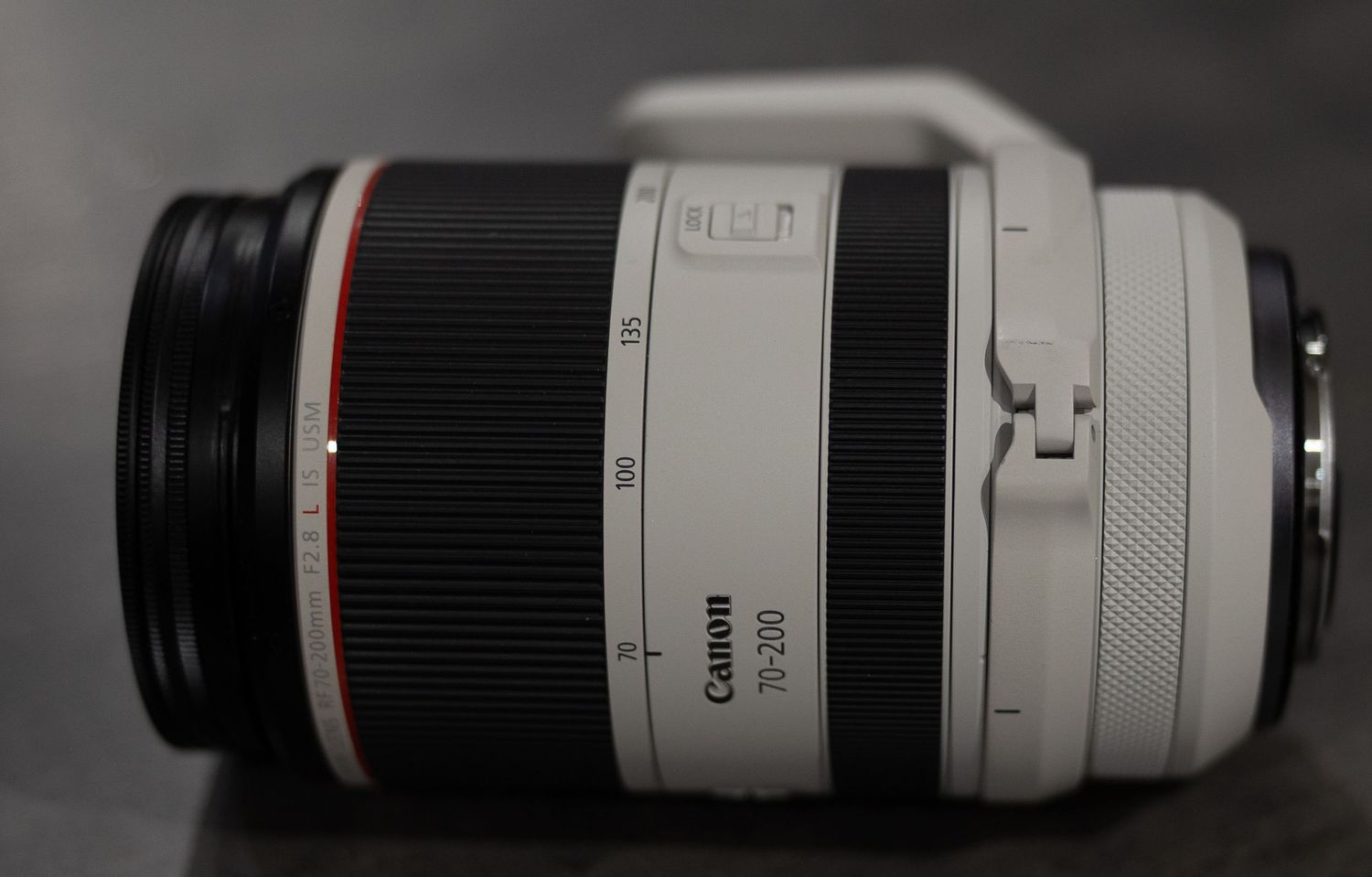
The Giant vs. The Pocket Rocket: Canon RF 28-70mm f/2L USM vs. RF 50mm f/1.8 STM
Is the extra money, worth the money?
In the world of the Canon RF mount, two lenses sit at opposite ends of the spectrum, representing two entirely different philosophies of photography. On one hand, you have the Canon RF 28-70mm f/2L USM, a "spec-beast" that defies physics and challenges the very need for prime lenses. On the other, you have the Canon RF 50mm f/1.8 STM, the spiritual successor to the legendary "Nifty Fifty"—a lens so light and affordable it’s practically a mandatory purchase for every R-series owner.
If you are trying to decide which of these lenses deserves a spot in your bag (or if one could actually replace the other), you’re looking at a classic battle of Versatility and Power vs. Portability and Value.
As the owner (and occasional user) of both lenses, I will break down every nuance, from autofocus motors to bokeh quality, to help you decide which piece of glass is right for your workflow, and if the eyewatering difference in price is worth it.
1. Specifications at a Glance
Before we dive into the "feel" and "soul" of these lenses, let's look at the cold, hard numbers.
Canon RF 28-70mm f/2L USM
Lens Type | Standard Zoom (L-Series)
Maximum Aperture | f/2.0 (Constant)
Minimum Aperture | f/22
Aperture Blades | 9 (Rounded)
Weight | 1,430g (3.15 lbs)
Filter Size | 95mm
Focus Motor | Ring-type USM
Weather Sealing | Yes
MSRP (Approx.) | £2,000 GBP
Canon RF 50mm f/1.8 STM
Lens Type | Standard Prime
Maximum Aperture | f/1.8
Minimum Aperture | f/22
Aperture Blades | 7 (Rounded)
Weight | 160g (0.35 lbs)
Filter Size | 43mm
Focus Motor | Gear-type STM
Weather Sealing | No
MSRP (Approx.) | £160 GBP
2. The Design Philosophy: L-Series Luxury vs. STM Utility
The RF 28-70mm f/2L: A Statement Piece
When Canon launched the RF mount, they wanted to show the world what the short flange distance and wide throat of the new mount could do. The 28-70mm f/2L was that statement. It is a lens that technically shouldn't exist in the DSLR world because it would be too large to be practical.
Even in the mirrorless world, it is a "behemoth." It is thick, heavy, and is most suited to a camera body with a substantial grip (like the R3 or R5 with a battery grip), buit will work on any R-Series Canon camera. However, the build quality is impeccable. It features the signature L-series red ring, magnesium alloy construction, and full weather sealing.
The RF 50mm f/1.8 STM: The Minimalist’s Dream
The RF 50mm f/1.8 is built for the exact opposite reason. It is designed to be invisible. It’s the lens you throw in your pocket "just in case." While it lacks the red ring and the metal-heavy construction of its big brother, it’s surprisingly well-built for its price point. It uses high-quality plastics and a metal mount, ensuring it doesn't feel like a toy despite its 160g weight.
3. Optical Performance: Sharpness and Character
Sharpness: Perfection vs. Personality
The RF 28-70mm f/2L is effectively four prime lenses in one. At 28mm, 35mm, 50mm, and 70mm, it is sharper wide-open at f/2 than many dedicated prime lenses are at f/2.8. The contrast is biting, and the "pop" is immediate.
The RF 50mm f/1.8 STM is very sharp in the center, even at f/1.8, but it does show its "budget" nature in the corners. You’ll notice some softness and vignetting when shooting wide open. However, stop it down to f/2.8 or f/4, and the sharpness becomes remarkably competitive.
Bokeh and Depth of Field
This is where the comparison gets interesting.
* The 50mm Prime: At f/1.8, it technically has a shallower depth of field than the zoom at f/2. If you want the absolute blurriest background for a headshot at 50mm, the prime wins by a hair.
* The Zoom: While "only" f/2, the zoom’s 9-blade aperture creates incredibly smooth, creamy bokeh that many find more "expensive-looking" than the 7-blade bokeh of the 50mm. Furthermore, at 70mm f/2, the compression often creates a more pleasing background blur for portraits than the 50mm can achieve.
4. Autofocus: USM vs. STM
Ring-type USM (Ultrasonic Motor)
The 28-70mm uses a high-torque Ring USM. This is necessary because the glass elements inside this lens are massive. It is fast, nearly silent, and incredibly accurate. It is designed for professional sports, weddings, and fast-paced journalism where missing focus isn't an option.
Gear-type STM (Stepping Motor)
The 50mm uses an STM motor, which is optimized for smooth focus transitions—making it a favourite for video. While it is plenty fast for most photography, it isn't "instant" like the USM. You will also hear a slight "whirring" sound as it focuses, whereas the USM is virtually silent to the human ear.
5. Practicality and Ergonomics: The "Daily Carry" Factor
The Weight Penalty
You cannot talk about the 28-70mm without talking about its weight. At nearly 1.5kg, it is a physical commitment. Using this lens for an 8-hour wedding will result in sore forearms and wrists. It also makes your camera setup very conspicuous; you won't be doing "stealthy" street photography with this lens. What you’ll get is knowing nods from fellow photographers and cries of “that’s a biggun!” from everyone else. It’s heavy. After a few hours, it's like lugging round an anvil.
The Stealth Factor
The 50mm f/1.8 makes an EOS R6 or R8 feel like a point-and-shoot. It’s perfect for travel, family gatherings, and street photography. It doesn't intimidate subjects, and it fits into even the smallest shoulder bags.
6. The Price Gap: Is the Zoom Worth 12x More?
The price difference is staggering: £160 vs. £2,000 (prices from www.camerasdori.com – see blogs 1 & 2).
You could buy twelve RF 50mm lenses for the price of one 28-70mm. To justify the 28-70mm, you have to be a working professional or a very serious hobbyist who values the ability to switch from a wide-angle 28mm group shot to a 70mm tight portrait in half a second without changing lenses—all while maintaining f/2.
For most people, the 50mm f/1.8 offers 85% of the image quality for 7% of the price.
7. Which One Should You Buy?
Buy the Canon RF 28-70mm f/2L USM if:
* You are a wedding photographer who needs one lens to do it all.
* You hate changing lenses in dusty or fast-paced environments.
* You want the "ultimate" zoom lens ever made, regardless of weight.
* You need professional-grade weather sealing.
Buy the Canon RF 50mm f/1.8 STM if:
* You want a lightweight, "walk-around" lens.
* You are on a budget but want a "fast" lens for low light.
* You primarily shoot street photography or casual portraits.
* You want to keep your camera setup small and discrete.
Conclusion
The RF 28-70mm f/2L USM is a masterpiece of engineering—a heavy, expensive, and glorious tool that replaces a bag full of primes. The RF 50mm f/1.8 STM is the "everyman's" hero—cheap, light, and surprisingly capable.
In a perfect world, many photographers own both. Use the 28-70mm when you’re "on the clock" and need the best performance possible, and keep the 50mm f/1.8 for those days when you just want to enjoy the process of photography without the weight of the world on your neck.
To help, here are two comparative unedited images taken with both lenses, using the same F2 exposure, both at 400 ISO and both at 50mm of the same subject – see if you can spot the difference!